Las Vegas attics hit 150°F in July. That heat pushes directly into your living space and forces your AC to run for months on end. The right attic insulation is what stops it, and what keeps your electric bill from climbing to $400 or more every summer.
Most Nevada homeowners pay between $1,500 and $3,500 to insulate a 1,000-square-foot attic. This price includes materials and professional attic installation but doesn’t cover removing old insulation or repairing structural issues. Costs vary based on insulation type, attic size, desired R-value, and whether you need to remove existing insulation first.
This guide breaks down every cost factor you’ll encounter. You’ll see real pricing for different insulation types, learn what drives costs up or down, and get a framework to calculate your own estimate. We’ve included regional comparisons with neighbouring states and identified hidden costs that catch homeowners off guard.
Average Attic Insulation Cost Overview in Nevada
Nevada attic insulation costs range from $1.35 to $4.06 per square foot when you factor in materials and labor. Most homeowners spend around $2.50 per square foot for a standard blown-in installation with R-38 insulation value.
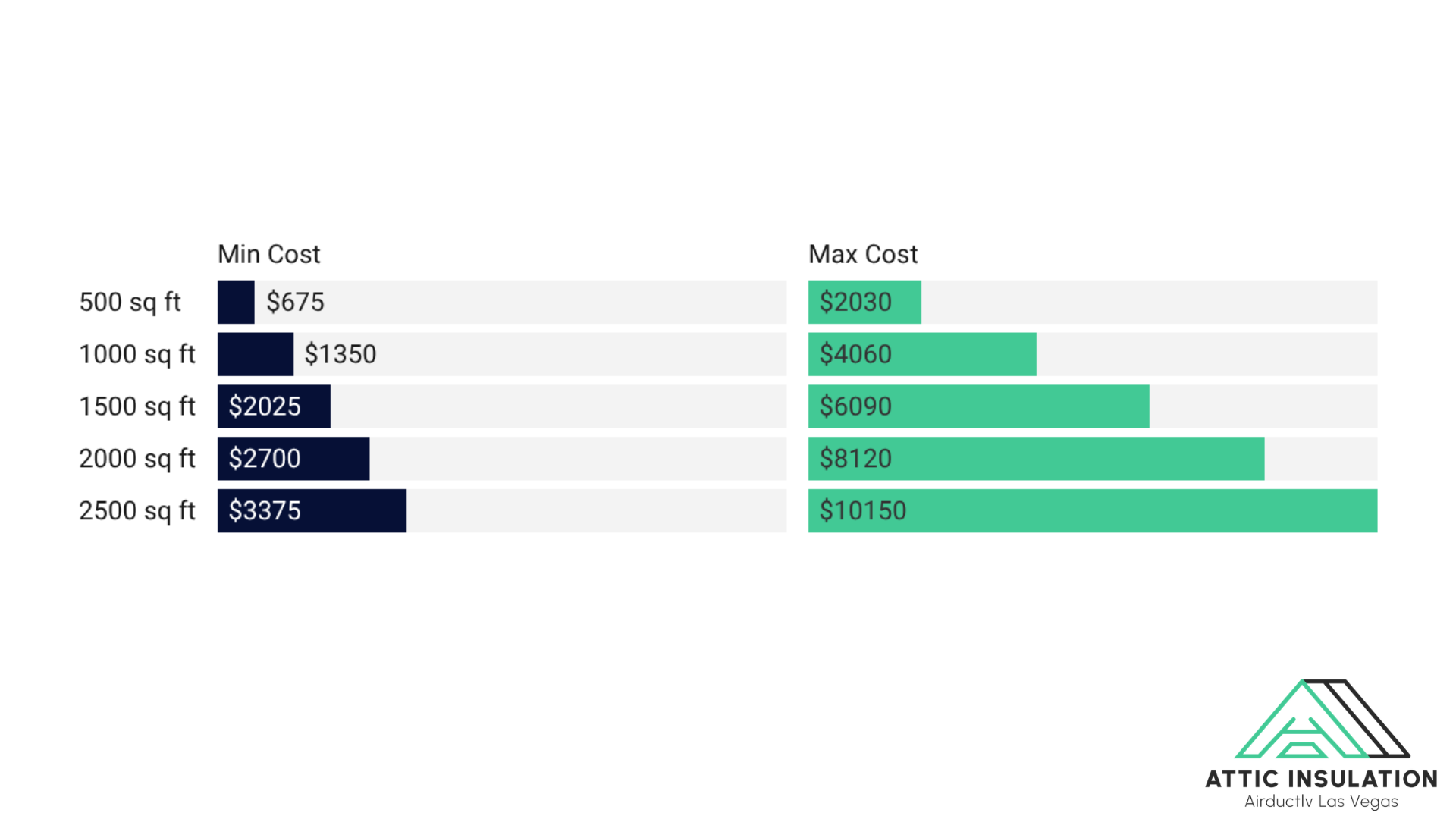
500 sq ft costs $675 to $2,030. Small attic typical of single-story homes or condos. Budget around $1,250 for a straightforward job at this size. Lower square footage means less material but labor setup costs stay similar.
1,000 sq ft costs $1,350 to $4,060. Standard size for most single-family homes in Nevada, with a typical all-in cost around $2,500. This is the most common project size and represents the pricing range you will see in most quotes.
1,500 sq ft costs $2,025 to $6,090. Larger single-story or medium two-story home. Expect to pay around $3,750 on average. Material costs scale proportionally but labor efficiency tends to improve on bigger jobs.
2,000 sq ft costs $2,700 to $8,120. Large two-story home or sprawling ranch style, averaging around $5,000 for a full installation. Multiple access points may be needed and complex roof lines can add to labor time.
2,500 sq ft costs $3,375 to $10,150. Very large home or custom build, with most jobs landing around $6,250. Projects this size often need multiple crews or extended work days to complete.
Attic insulation budget estimator
Estimated ranges only. Exact pricing confirmed during your free on-site inspection.
What’s Typically Included in Attic Insulation Costs
Your base attic insulation quote covers the insulation material itself and professional installation labor. Contractors bring the blown-in machine or batts to your home, prepare the work area with drop cloths, and install insulation to your specified R-value. Basic cleanup and debris removal from the installation process is included.
Most quotes also cover moving lightweight items in the attic temporarily and replacing them after installation. You get a final walkthrough where the contractor confirms coverage and answers questions about maintenance.
What Costs Extra for Attic Insulation Projects
Several items fall outside the base attic insulation quote and add to your total cost:
Removing old insulation adds $390 to $800. Old insulation removal and disposal requires separate labor. Contractors bag up existing material, haul it out through attic access, and dispose of it properly. Price depends on current insulation depth and accessibility.
Air sealing adds $300 to $1,200. Sealing gaps around pipes, wires, and recessed lights stops air leakage. This step happens before installing new insulation and requires caulk, expanding foam, and specialized materials for larger penetrations.
Attic ventilation improvements add $400 to $2,000. Installing or upgrading ridge vents, soffit vents, or powered attic fans ensures proper airflow. Nevada’s extreme heat makes ventilation critical, but it’s often sold separately from insulation work.
Rodent proofing and cleanup adds $500 to $2,500. If you have signs of rodent activity, you’ll pay for exclusion work and sanitization before new attic insulation goes in. This includes sealing entry points and removing contaminated material.
Structural repairs add $200 to $3,000. Damaged roof decking, broken trusses, or water-damaged framing needs fixing before insulation. Contractors won’t install over compromised structures, and repair costs vary widely based on damage extent.
What Affects Attic Insulation Cost in Nevada
Cost by Insulation Type
Insulation material choice creates the biggest price variation in Nevada attic projects. Each type has different installation requirements, R-value per inch, and labor demands.
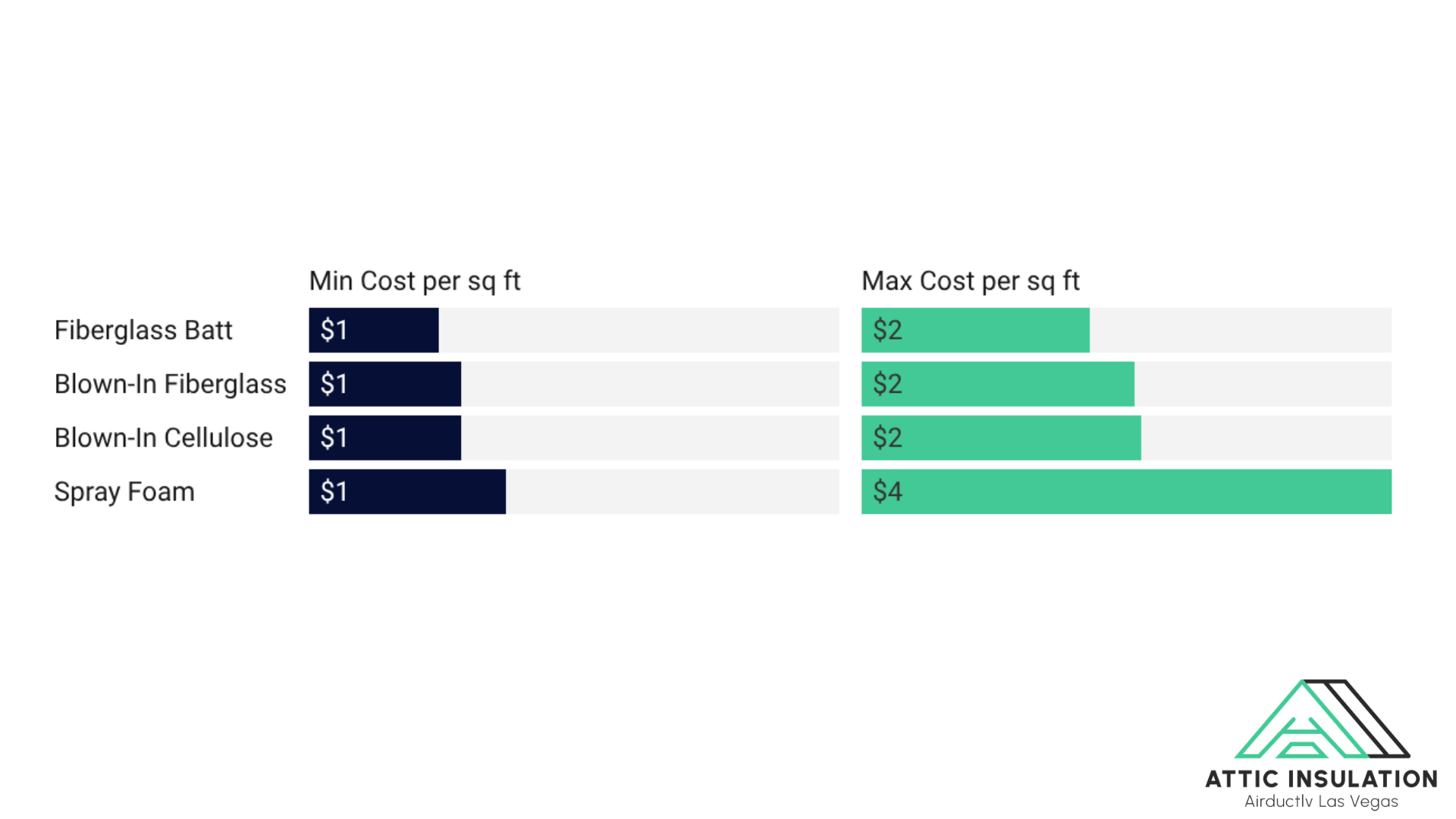
Fiberglass Batt insulation costs $0.86 to $1.50 per square foot, averaging around $1.15. Pre-cut panels that fit between joists, making it the most affordable option on this list. Works well for attics with standard joist spacing and easy access. Installation goes faster than blown-in but coverage is not as complete around obstacles like pipes and wiring.
Blown-In Fiberglass costs $1.01 to $1.80 per square foot, with most jobs coming in around $1.35. Loose fiberglass blown through a hose that fills gaps and irregular spaces better than batts. A good fit for attics with uneven joist spacing or many penetrations. Material is non-combustible and holds up well against moisture.
Blown-In Cellulose costs $1.01 to $1.85 per square foot, averaging around $1.40. Made from recycled paper treated with fire retardant and blown into place. Cellulose settles more than fiberglass over time but provides better air sealing and packs tightly into hard-to-reach spots. Treated to resist both pests and fire.
Spray Foam costs $1.30 to $3.50 per square foot, averaging around $2.20, making it the most expensive option. Liquid foam sprayed directly onto attic surfaces that expands and hardens into a solid barrier. Unlike other types, it creates an air seal and insulation layer in a single application. Open-cell foam costs less than closed-cell but delivers a lower R-value per inch.
Cost by Attic Size and Square Footage
Attic size directly determines material needs and labor hours. Larger attics need more attic insulation but labor efficiency can improve on bigger jobs.
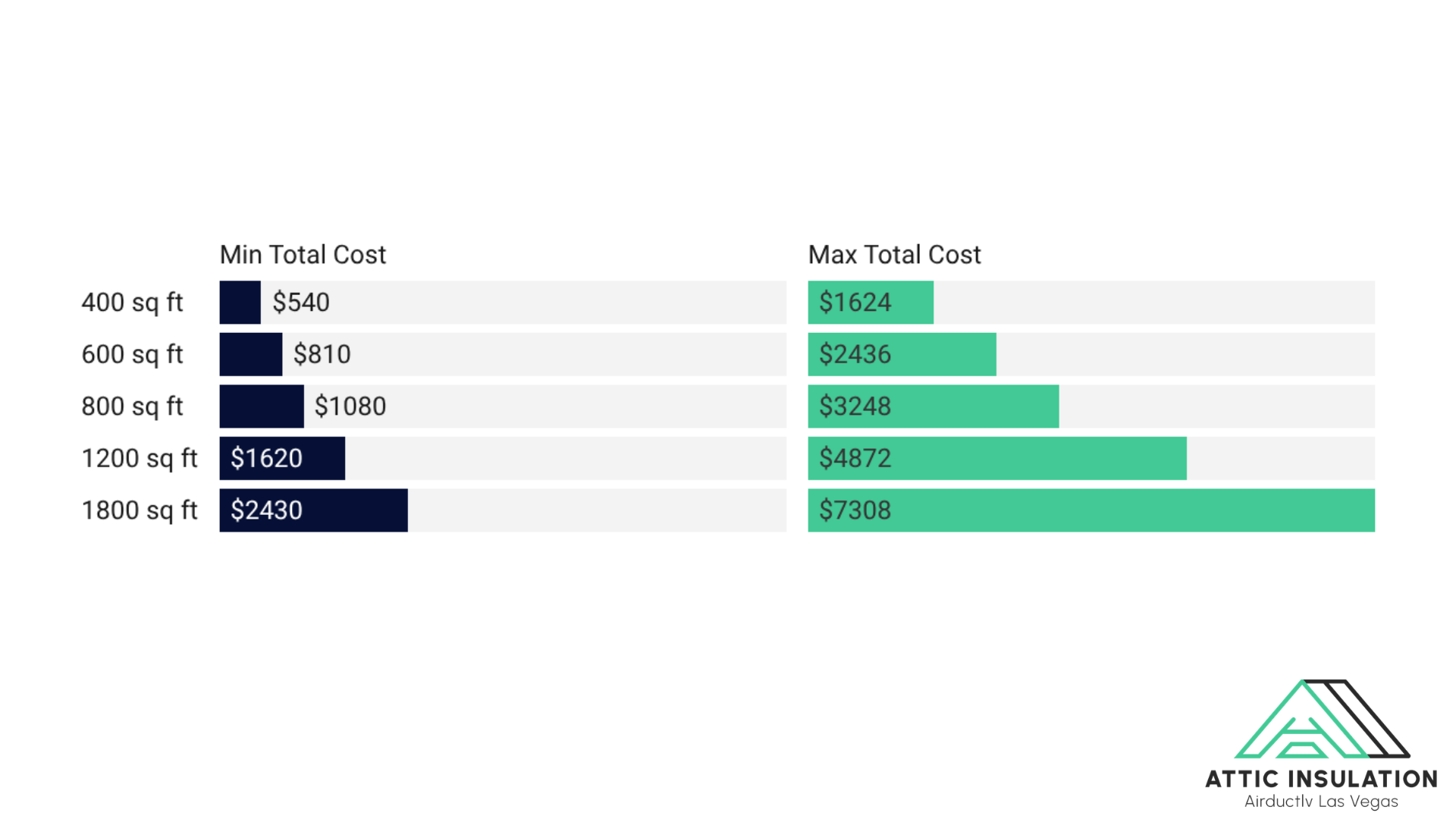
400 sq ft costs $540 to $1,624, averaging around $1,000. Very small attic found in starter homes or condos. Minimum service charges apply even for small jobs, which pushes the per-square-foot cost higher than larger projects.
600 sq ft costs $810 to $2,436, with a typical job running around $1,500. Small to medium attic common in compact single-story homes. Access is usually straightforward through a single hatch or pull-down stairs and most jobs wrap up in half a day.
800 sq ft costs $1,080 to $3,248, averaging around $2,000. Medium attic common in standard tract homes. A two-person crew can typically complete the full installation in a single day with no staging issues.
1,200 sq ft costs $1,620 to $4,872, with most jobs landing around $3,000. Larger attic typical of two-story homes. Working around HVAC equipment or dealing with multiple access points can add time to the installation.
1,800 sq ft costs $2,430 to $7,308, averaging around $4,500. Large attic found in spacious two-story or custom homes. Jobs this size often stretch across two days and may require materials to be staged at multiple points throughout the attic.
Cost by R-Value Requirements
R-value measures insulation’s resistance to heat flow. Nevada’s climate demands higher R-values than many other states, and reaching higher R-values requires more material.
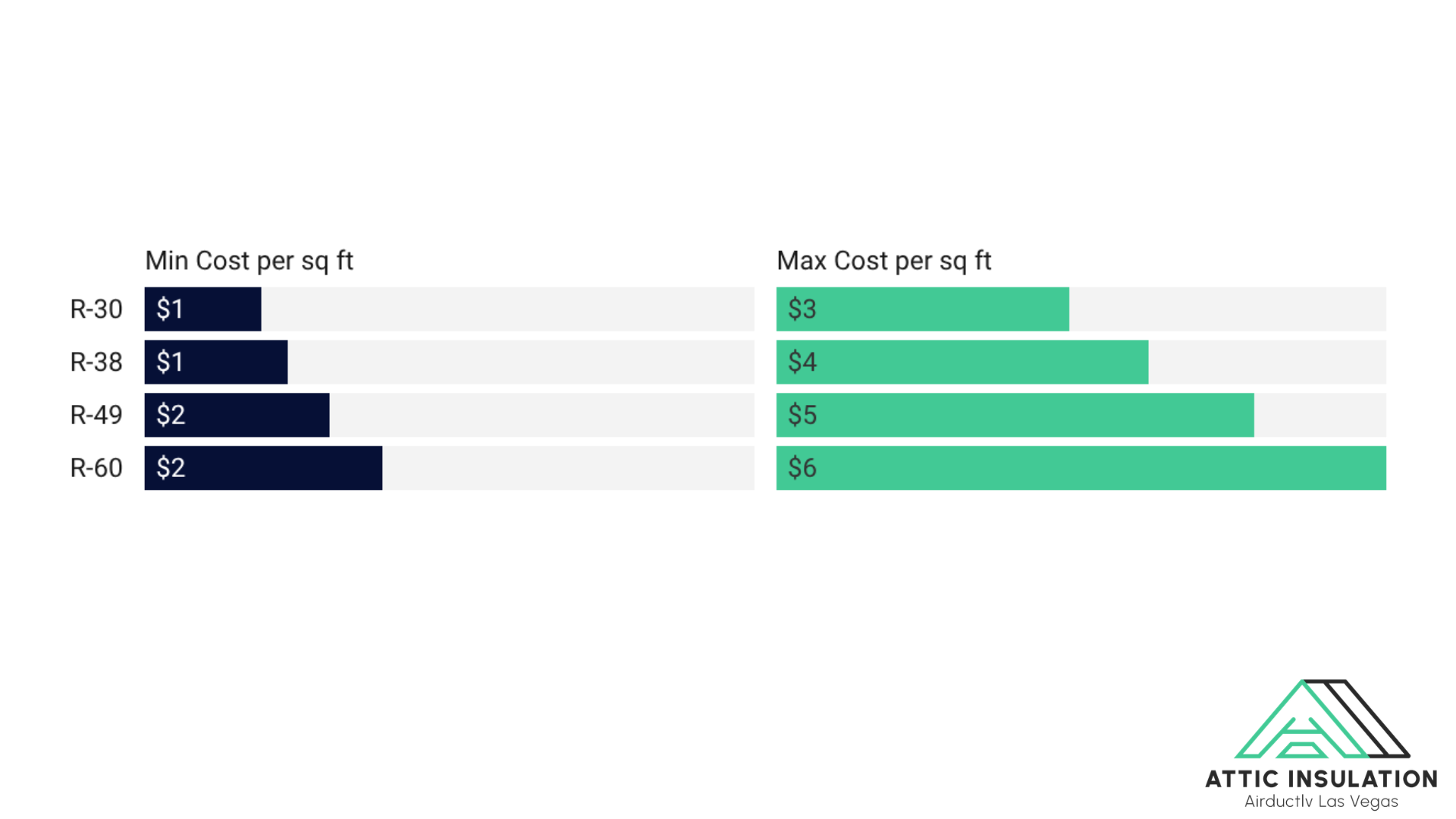
R-30 costs $1.10 to $2.75 per square foot, averaging around $1.80. This is the minimum recommended level for Nevada attics, requiring about 9 to 10 inches of blown fiberglass or 8 inches of cellulose. It meets code in some areas but falls short of what Las Vegas heat actually demands, so energy savings will be limited compared to higher R-values. Attic insulation does help in summer, but only when installed at the right depth for the climate.
R-38 costs $1.35 to $3.50 per square foot, averaging around $2.20. The standard recommendation for Las Vegas and Henderson homes, needing 12 to 13 inches of blown fiberglass or 10 to 11 inches of cellulose. This level hits the sweet spot between upfront cost and long-term cooling savings for most homeowners.
R-49 costs $1.75 to $4.50 per square foot, averaging around $2.85. High-performance option for maximum energy efficiency, requiring 16 to 17 inches of blown fiberglass or 13 to 14 inches of cellulose. Worth considering if your cooling bills are consistently high or you plan to stay in the home long-term.
R-60 is occasionally specified for net-zero energy builds but is not practical or cost-effective for standard Las Vegas homes. If you are building to net-zero standards, ask your contractor for a custom quote.
NV Energy Rebates for Attic Insulation
Qualifying insulation upgrades in Nevada may be eligible for NV Energy rebates, which can offset your total installation cost. Rebates are typically available when you upgrade to R-38 or higher and use approved materials and licensed contractors.
We check your eligibility during the free inspection at no cost to you. Rebate amounts change periodically, so ask about current availability when you get your quote. Taking advantage of a rebate can shorten your payback period from 5 years down to 3 or less.
Cost to Remove Old Attic Insulation
Removing existing insulation before installing new material adds separate labor and disposal costs. Contractors bag the old material, carry it through attic access points, and haul it to disposal facilities.
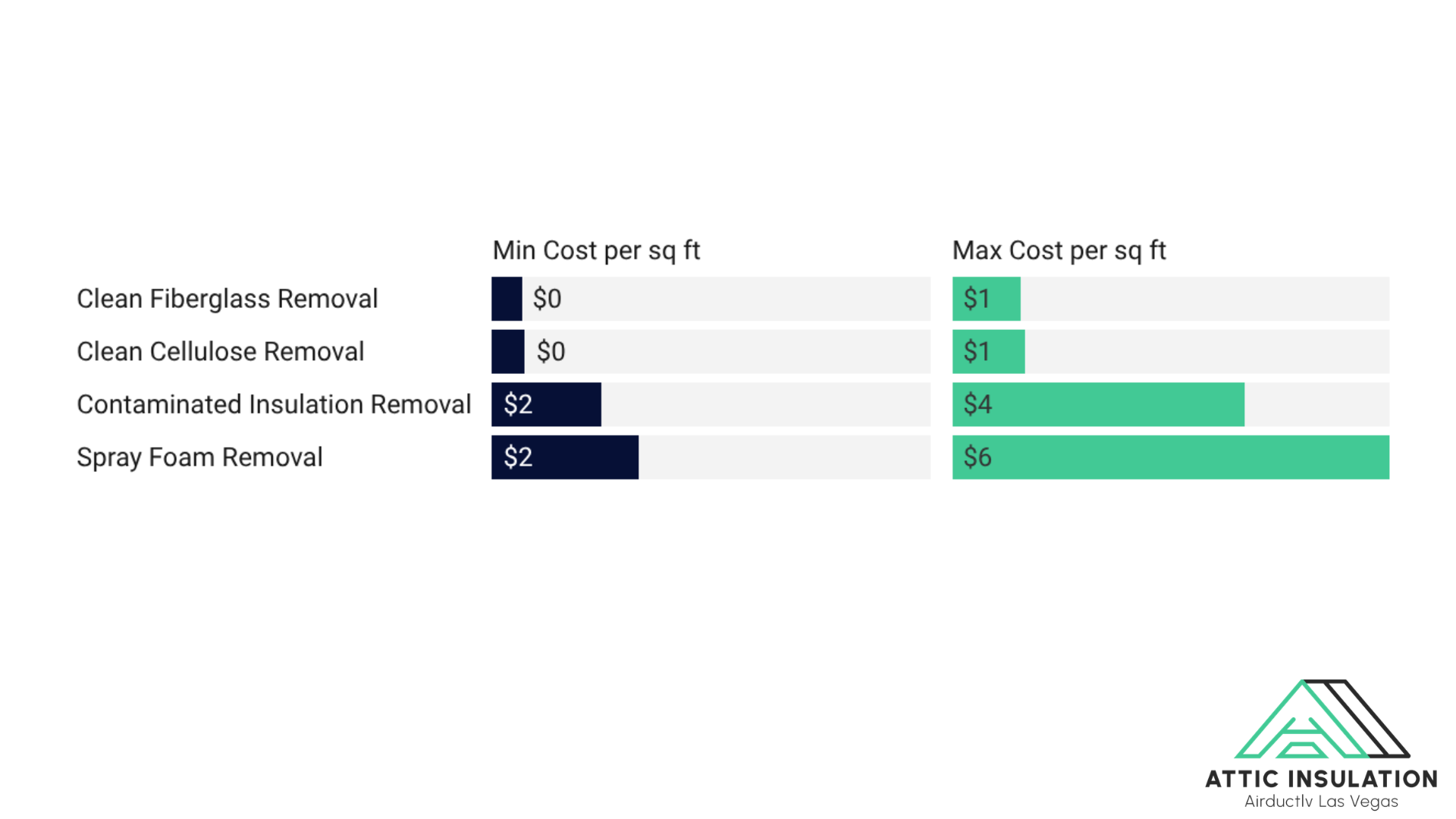
Clean Fiberglass Removal costs $0.40 to $0.95 per square foot, averaging around $0.65. Covers removal of uncontaminated fiberglass batts or blown-in material. Batts come out faster than blown-in insulation since they lift out in sections. Contractors wear protective gear and use large bags to contain the material throughout the process.
Clean Cellulose Removal costs $0.45 to $1.00 per square foot, averaging around $0.70. Cellulose in good condition is straightforward to remove but heavier than fiberglass and generates more dust, which adds a bit more time and labor compared to fiberglass removal.
Contaminated Insulation Removal costs $1.50 to $4.00 per square foot, averaging around $2.50. Required when insulation has been damaged by water, mold, or rodents. Special handling and disposal at approved facilities is mandatory, and contractors typically need respirators and protective suits. Disposal fees are significantly higher than clean material. Knowing when insulation has reached this point can help you catch the problem before it gets worse.
Spray Foam Removal costs $2.00 to $6.00 per square foot, averaging around $3.50. The most labor-intensive removal type on this list. Hardened foam bonds directly to wood and has to be scraped or cut away by hand, which is slow work that generates a large amount of debris. Budget extra time and cost if your attic has any spray foam present.
Cost by Attic Access and Condition
How easily contractors can reach your attic and the condition they find affects labor time and pricing. Difficult access means slower material transport and installation.
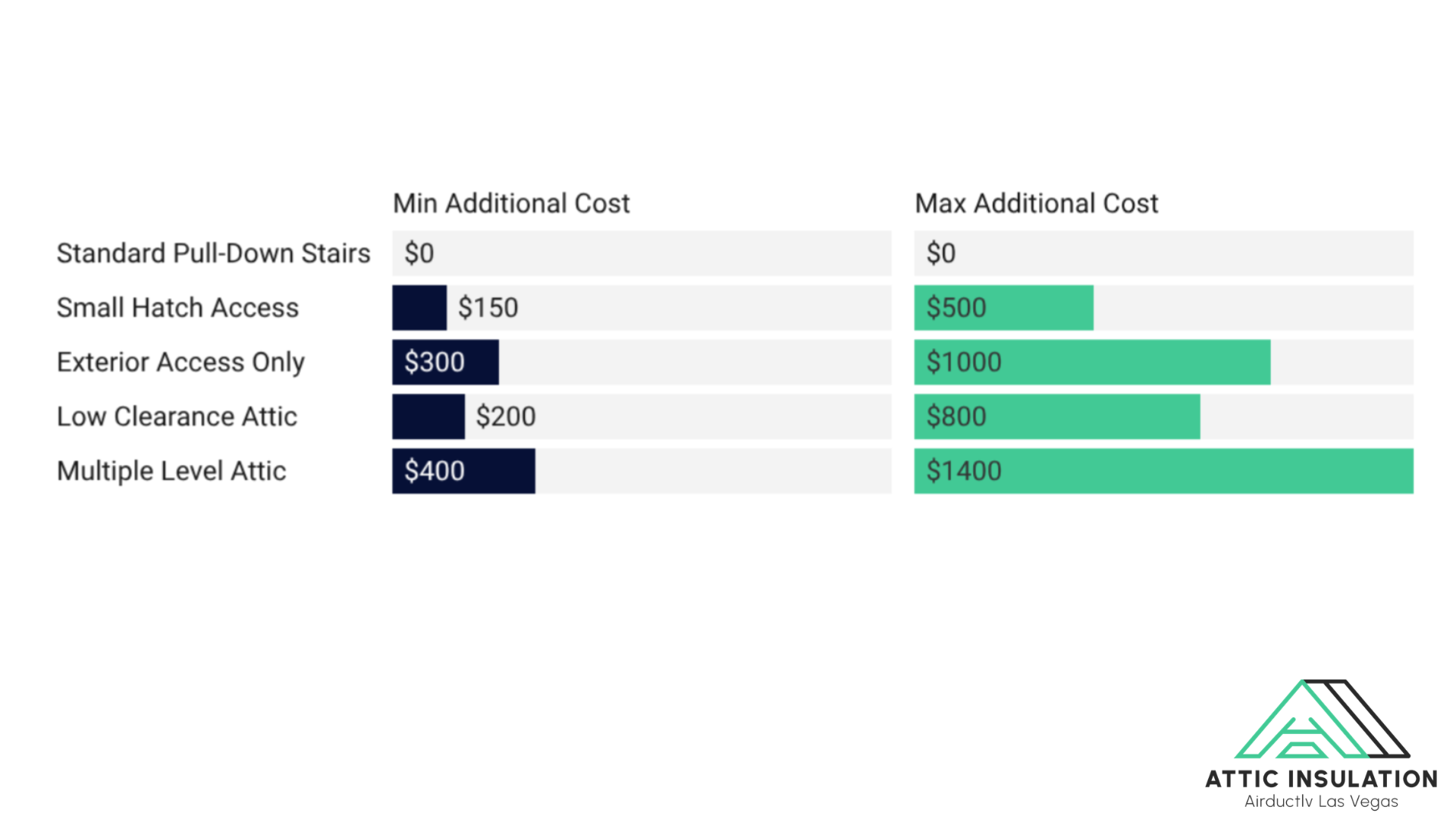
Standard Pull-Down Stairs adds no additional cost. Normal attic access with fold-down stairs wide enough for equipment and materials. This is the baseline condition that contractors work with most often, with no added time or difficulty.
Small Hatch Access adds $150 to $500, averaging around $300. Entry through a small ceiling hatch without stairs means materials have to be passed up in smaller batches. Workers need a ladder and more time to transfer equipment, which slows the overall job down.
Exterior Access Only adds $300 to $1,000, averaging around $600. No interior attic access means contractors must enter through gable vents or cut a new opening entirely. Cutting and framing a new access point requires carpentry work and drywall finishing afterward, which accounts for most of the added cost.
Low Clearance Attic adds $200 to $800, averaging around $450. Any attic with less than 4 feet of headroom at the peak forces workers to crawl or crouch for the entire installation. Progress is slower and special equipment with longer hoses is sometimes needed to reach all areas without standing.
Multiple Level Attic adds $400 to $1,400, averaging around $750. Complex attics with different ceiling heights or separated sections require contractors to reposition equipment multiple times and may need more than one access point. The additional setup and movement between sections is what drives the added cost.
Cost for Additional Attic Services
Several related services improve attic insulation performance or prepare your attic for new insulation. These are typically quoted separately from the base insulation work.
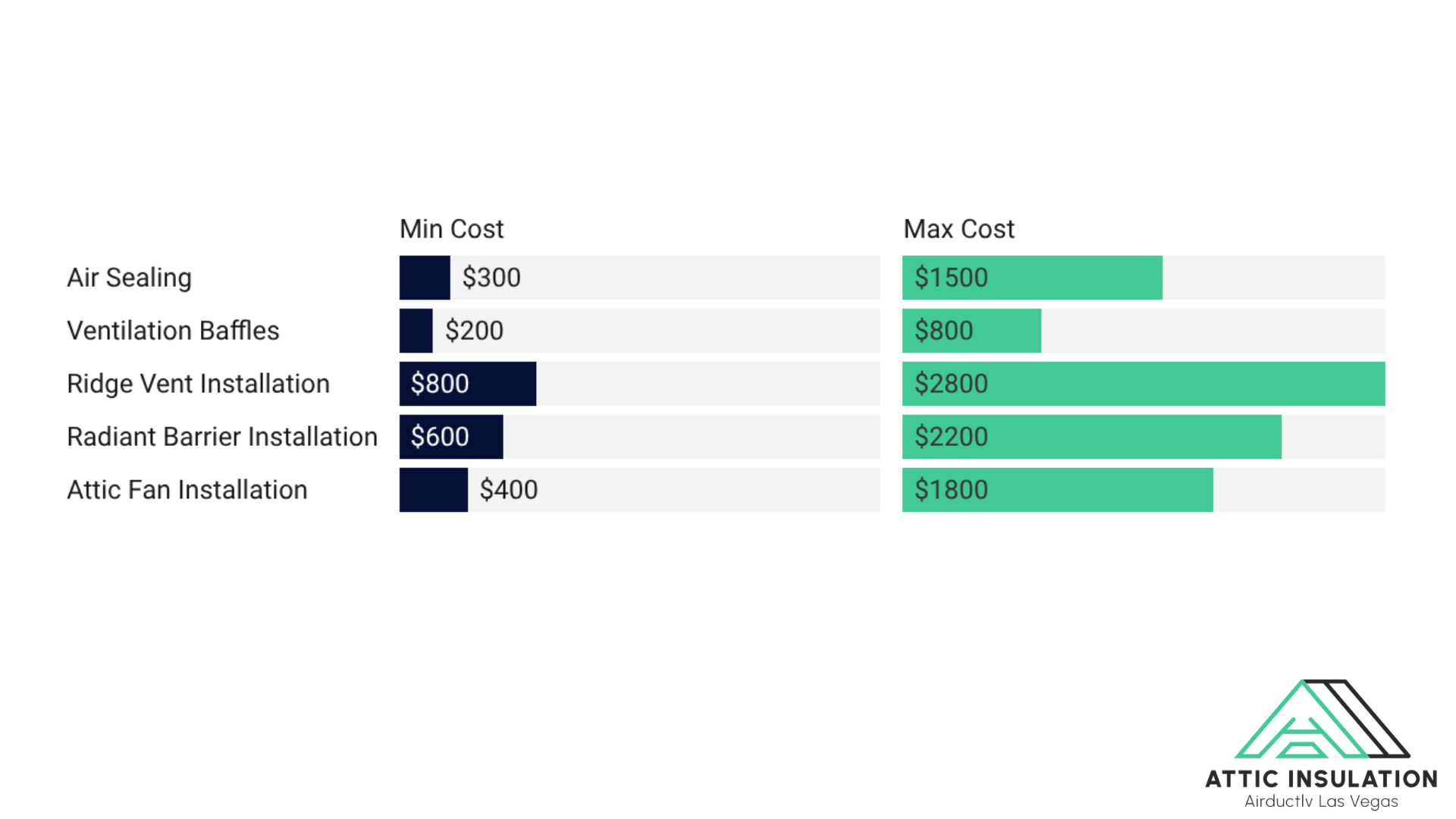
Air Sealing costs $300 to $1,500, averaging around $750. This step happens before insulation goes in and closes off air leaks around pipes, wires, chimneys, and recessed lights. Contractors use caulk, expanding foam, and fire-rated materials depending on what they are sealing. Skipping this step means conditioned air keeps escaping through ceiling penetrations regardless of how much insulation you add.
Ventilation Baffles cost $200 to $800, averaging around $450. Foam or cardboard channels installed along the roofline to keep airflow moving from soffit vents into the attic. Without them, blown-in insulation can block the vents entirely and cause heat and moisture to build up. One baffle is needed for each rafter bay that has a soffit vent.
Ridge Vent Installation costs $800 to $2,800, averaging around $1,500. A continuous slot is cut along the roof peak and vent material is installed to allow hot air to escape passively. Ridge vents work together with soffit vents to pull fresh air through the attic and push hot air out. Installation involves roofing work and shingle removal along the ridge line.
Radiant Barrier Installation costs $600 to $2,200, averaging around $1,200. Reflective foil is stapled to the underside of roof rafters to bounce radiant heat away before it reaches the attic floor. Particularly effective in Nevada where direct sun intensity is high. This does not replace insulation but works alongside it to reduce heat transfer from the roof down.
Attic Fan Installation costs $400 to $1,800, averaging around $900. A powered exhaust fan is mounted in the attic to actively push hot air out through a roof or gable vent opening. Electrical wiring is required for standard fans. Solar-powered models cost more upfront but run without adding to your monthly electric bill.
Attic Insulation Costs in States Near Nevada
Regional labor rates, climate requirements, and material availability create cost differences between Nevada and neighboring states. Understanding these variations helps you know if quotes you’re getting align with regional norms.
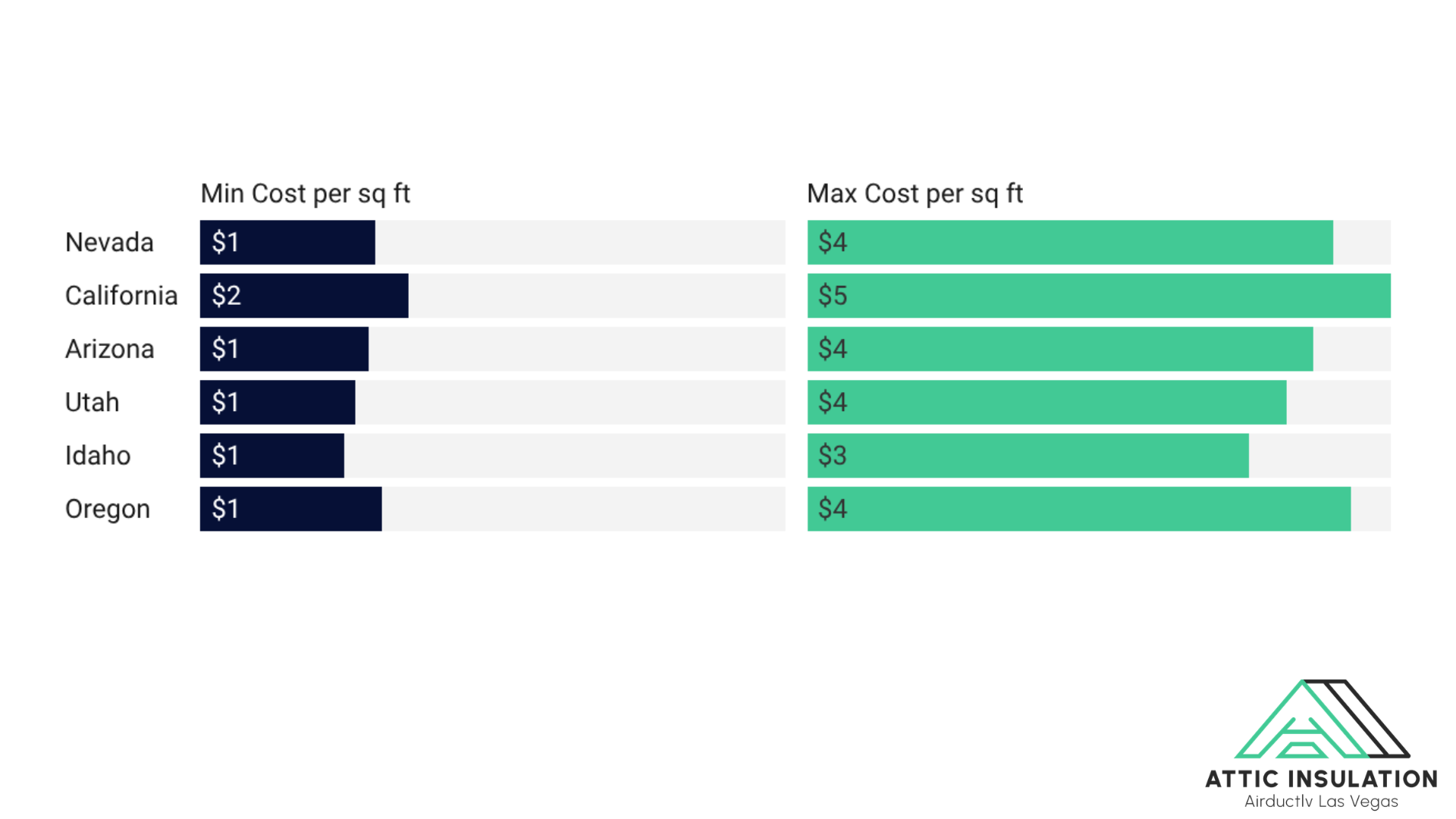
Nevada costs $1.35 to $4.06 per square foot, averaging around $2.50. High labor rates in Las Vegas and Reno combined with R-38 minimum recommendations for the desert climate push costs above several neighboring states. Year-round demand driven by extreme summer heat keeps pricing consistent throughout the year.
California costs $1.60 to $4.50 per square foot, averaging around $2.85. The highest costs among neighboring states, driven by strict building codes, Title 24 energy requirements, and above-average labor rates. Coastal areas tend to cost more than inland regions where labor markets are less competitive.
Arizona costs $1.30 to $3.90 per square foot, averaging around $2.40. Pricing runs slightly below Nevada despite facing similar climate demands. Phoenix metro area costs track closely with Las Vegas, while rural parts of the state come in noticeably cheaper due to lower labor rates.
Utah costs $1.20 to $3.70 per square foot, averaging around $2.20. Lower labor rates and less extreme summer heat keep Utah below Nevada on overall cost. Salt Lake City area jobs run highest, while rural counties can come in well below the state average.
Idaho costs $1.10 to $3.40 per square foot, averaging around $2.00. The most affordable state on this list. A colder climate shifts the focus toward winter heat retention rather than blocking intense heat, and lower prevailing labor rates across the state keep prices down.
Oregon costs $1.40 to $4.20 per square foot, averaging around $2.60. Portland metro area jobs run higher than comparable Nevada work, while rural Oregon comes in lower. The milder climate means lower R-value requirements, but strict energy codes and higher labor rates offset that savings in most parts of the state.
Why Regional Costs Vary
Labor rates create the biggest difference between states. California and Oregon have higher prevailing wages than Nevada, while Idaho and rural Utah have lower rates. Nevada falls in the middle, with Las Vegas and Reno commanding higher prices than rural areas like Elko or Pahrump.
Climate requirements affect R-value recommendations and material quantities. Nevada and Arizona need high R-values to block summer heat, while Idaho and Oregon focus on winter heat retention. California’s Title 24 requirements often exceed neighboring states, which adds material costs.
Material availability and competition influence pricing. Las Vegas and Phoenix have many insulation contractors competing for work, which can drive prices down. Rural areas in any state face limited contractor options and higher material transport costs.
Building codes and permit requirements vary by state and jurisdiction. Some Nevada counties require permits for attic insulation work, while others don’t. California has strict permitting across most jurisdictions. Permit costs and inspection requirements add to total project expenses.
Hidden and Additional Attic Insulation Costs
Several costs fall outside standard insulation quotes. These extras catch homeowners off guard if you don’t ask about them upfront.
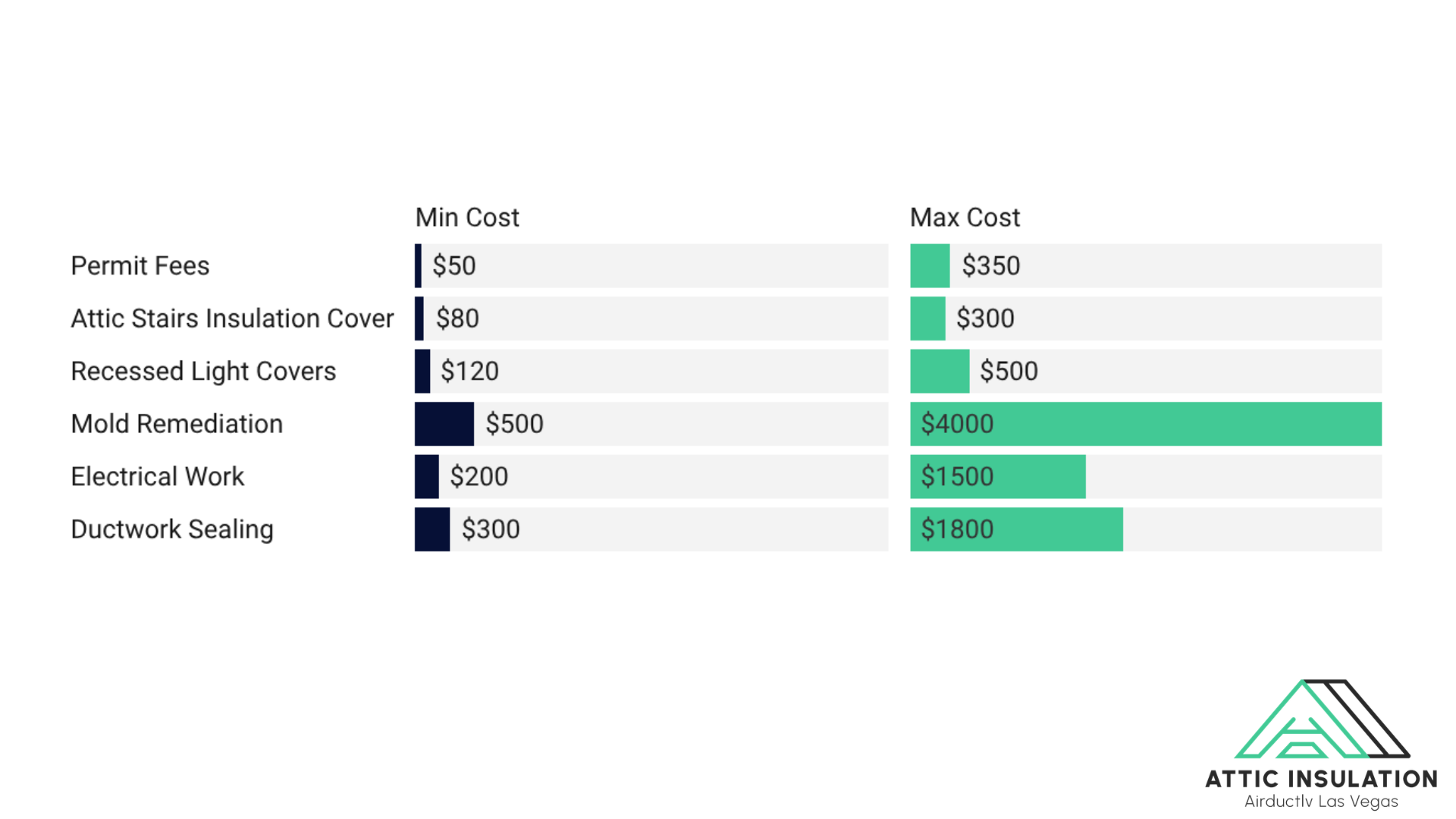
Permit Fees cost $50 to $350, averaging around $150. Not all Nevada jurisdictions require permits for insulation work, but Las Vegas and Henderson often do. Fees vary based on project value and local fee schedules, so check with your building department before getting quotes. Some contractors include permit costs in their pricing while others add it as a separate line item.
Attic Stairs Insulation Cover costs $80 to $300, averaging around $150. An insulated tent or rigid cover that seals the gap around pull-down attic stairs, which is one of the most common air leakage points in a home. Can be DIY or professionally installed. Stock sizes cover most standard openings, while custom-built covers for non-standard stairs cost more.
Recessed Light Covers cost $120 to $500, averaging around $280. Fire-rated boxes that seal around recessed light fixtures before insulation is installed. Building codes prohibit insulation from making direct contact with non-IC-rated lights, so any fixtures in the attic floor need a cover. One cover is required per fixture and adds installation time to the overall job.
Mold Remediation costs $500 to $4,000, averaging around $1,500. Required when active mold growth or water damage is found during the attic inspection. Contractors treat affected areas, remove contaminated materials, and address the moisture source causing the problem. Total cost depends on how widespread the growth is and whether structural materials need to be replaced.
Electrical Work costs $200 to $1,500, averaging around $600. Needed when existing wiring blocks insulation installation or creates a safety hazard. Old knob-and-tube wiring or junction boxes sitting on top of ceiling joists are the most common issues in homes built before 1990. A licensed electrician handles this work separately from the insulation contractor, so budget for it as an additional trade cost.
Ductwork Sealing costs $300 to $1,800. Sealing leaks in HVAC ducts running through the attic. Most projects fall between $300 and $1,800, with an average cost around $800. Leaky ducts waste conditioned air and reduce insulation effectiveness. Professional air duct cleaning services can identify and seal these leaks during insulation work. See how much air duct cleaning costs in Las Vegas if you need the full duct system serviced at the same time.
When These Costs Apply
- Permit fees apply in jurisdictions that regulate insulation work. Call your local building department before getting quotes. Some contractors include permit costs in their pricing, while others add it as a separate line item.
- Attic stairs covers make sense if you have pull-down stairs and want to stop air leakage. You’ll feel drafts around stairs without proper sealing. This upgrade pays for itself in energy savings within a few years.
- Recessed light covers are required by code when installing insulation around non-IC-rated fixtures. Your contractor should identify these during inspection. Skipping this step creates fire hazards and code violations.
- Mold remediation becomes necessary when inspectors find active growth or water damage. You can’t install insulation over mold. Address moisture sources first or the problem returns after new insulation is in.
- Electrical work applies when wiring blocks insulation installation or creates safety hazards. Buried junction boxes violate code and make future electrical work impossible. Budget for this if your home was built before 1990.
- Ductwork sealing makes sense when ducts run through unconditioned attic space. Sealed ducts improve system efficiency and reduce strain on your AC. This work pairs well with insulation upgrades.
FAQs
How much does it cost to insulate a 1,500 sq ft attic in Nevada?
Insulating a 1,500 square foot attic in Nevada costs $2,025 to $6,090, with most homeowners paying around $3,750. This price includes blown-in fiberglass or cellulose at R-38 and professional installation. Adding old insulation removal pushes the total to $4,000 to $7,500. Spray foam costs significantly more at $4,500 to $9,000 for the same size attic.
Is blown-in or batt insulation cheaper in Nevada?
Fiberglass batt insulation costs less upfront at $0.86 to $1.50 per square foot compared to blown-in at $1.01 to $1.80 per square foot. Batts save you $200 to $500 on a typical 1,000 square foot attic. Blown-in attic insulation provides better coverage around obstacles and fills irregular spaces that batts can’t reach. The better coverage means fewer air leaks and better energy performance, which can offset the higher initial cost through lower cooling bills.
What R-value do I need for attic insulation in Las Vegas?
Las Vegas attics need R-38 minimum for good energy performance. This requires 12 to 13 inches of blown fiberglass or 10 to 11 inches of cellulose. R-30 meets code in some areas but doesn’t provide enough protection against summer heat that pushes attic temperatures to 150°F. Upgrading to R-49 costs about $0.65 more per square foot but reduces cooling costs further if you have high electric bills.
Does removing old attic insulation cost extra?
Removing old insulation costs $0.40 to $1.00 per square foot as a separate charge from new insulation installation. A 1,000 square foot attic costs $400 to $1,000 for removal and disposal. Contaminated insulation from water damage, mold, or rodents costs $1.50 to $4.00 per square foot to remove. Some contractors bundle removal and new installation at a package price, but most quote them separately.
Can I add new insulation over existing insulation?
You can add new insulation over existing material if the old insulation is dry, uncontaminated, and in good condition. Adding on top works well when you’re upgrading from R-19 to R-38 and the existing material is still performing. Remove old insulation first if it is wet, moldy, heavily compressed, or shows any sign of pest activity. When in doubt, a free inspection will tell you which situation you are dealing with before you commit to either approach.
How long does attic insulation installation take?
Most attic insulation projects take 4 to 8 hours for a standard 1,000 square foot attic. Smaller attics under 600 square feet often finish in 3 to 4 hours. Large attics over 1,500 square feet may take a full day or extend to two days. Adding removal of old insulation adds 2 to 4 hours. Complex attics with low clearance, multiple levels, or difficult access take longer.
Final Thoughts
Most Nevada homeowners spend $1,500 to $3,500 to insulate a 1,000 square foot attic with blown-in material at R-38. Costs vary based on insulation type, attic size, R-value requirements, and whether you need to remove old insulation first. Spray foam costs more at $2.20 per square foot average, while fiberglass batts cost less at $1.15 per square foot.
Attic size, insulation type, and R-value create the biggest cost differences. A 500 square foot attic costs half what a 1,000 square foot attic costs. Upgrading from R-38 to R-49 adds $0.65 per square foot. Removing contaminated insulation costs $2.50 per square foot compared to $0.65 for clean removal.
Get at least three quotes before choosing a contractor. Compare what’s included in each quote. Some contractors include air sealing and ventilation baffles, while others charge separately. Ask about permit requirements, removal needs, and access challenges during the estimate. Use the calculation framework in this guide to verify quotes against realistic pricing.
Proper attic insulation pays for itself through lower cooling bills in Nevada’s climate. Most upgrades have 3 to 7 year payback periods. Start by measuring your attic, choosing your target R-value, and getting detailed quotes from licensed contractors in Las Vegas and Henderson.