Approximately 90% of US homes have inadequate attic insulation, and Las Vegas homes feel that gap more than most. With attics hitting 150°F in summer and AC running six months a year, the numbers behind attic insulation matter more here than anywhere else in the country. This guide compiles the latest data on costs, savings, installation rates, and environmental impact to help Nevada homeowners make informed decisions
Key Statistics About Attic Insulation
- The average cost of professional attic insulation installation in the United States ranges from $1,500 to $3,500 for a 1,000 square foot attic in 2026.
- Homeowners in the United States can save between $200 and $600 annually on energy bills with properly installed R-38 attic insulation in 2026.
- Approximately 90% of homes in the United States have inadequate attic insulation as of 2026.
- Proper attic insulation in hot climates like Nevada reduces cooling costs by 25% to 40% in the United States in 2026.
- The average payback period for attic insulation upgrades in the United States is 3 to 7 years as of 2026.
- In 2026, blown-in fiberglass accounts for approximately 40% to 45% of all residential attic insulation installations in the United States.
- Homes built before 2000 in the United States have an average attic insulation R-value of R-19 or less as of 2026, which falls below current recommendations.
What is the Average Cost of Attic Insulation in the United States in 2026?
Average Installation Costs by Project Size in the US in 2026
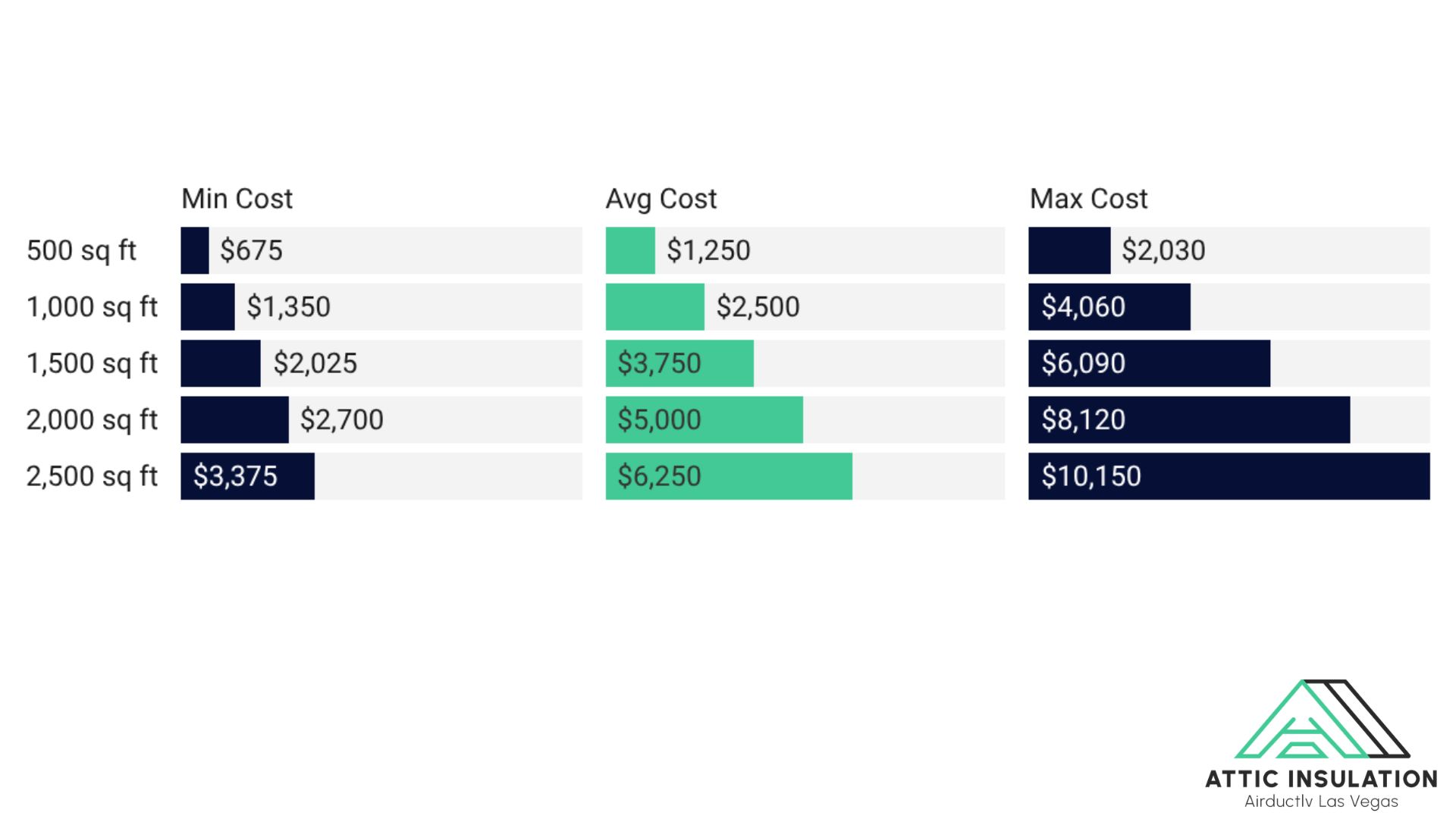
- Professional attic insulation installation in the United States costs between $1.35 and $4.06 per square foot in 2026.
- A 1,000 square foot attic insulation project in the United States costs approximately $2,500 on average in 2026.
- Homeowners installing insulation in a 1,500 square foot attic in the US pay between $2,025 and $6,090 in 2026.
- Large attic insulation projects covering 2,500 square feet in the United States range from $3,375 to $10,150 in 2026.
The cost per square foot varies based on insulation material choice, existing conditions, and whether old insulation needs removal. Projects requiring removal of contaminated or damaged insulation add $0.40 to $4.00 per square foot to total costs in 2026. Labor typically accounts for 40% to 60% of total project costs in the United States.
Average Cost by Insulation Type in the United States in 2026
- Blown-in fiberglass insulation in the United States costs between $1.01 and $1.80 per square foot in 2026.
- Fiberglass batt insulation costs range from $0.86 to $1.50 per square foot in the United States in 2026.
- Blown-in cellulose insulation in the US costs approximately $1.01 to $1.85 per square foot in 2026.
- Spray foam insulation in the United States ranges from $1.30 to $3.50 per square foot depending on whether it’s open-cell or closed-cell in 2026.
Material choice significantly impacts total project costs. Spray foam costs 60% to 100% more than blown-in fiberglass but provides superior air sealing properties. Most homeowners in the United States choose blown-in fiberglass for its balance of cost and performance in 2026.
| Insulation Type | Cost Per Square Foot | Thickness for R-38 |
| Fiberglass Batt | $0.86 – $1.50 | 10 – 13 inches |
| Blown-In Fiberglass | $1.01 – $1.80 | 14 – 17 inches |
| Blown-In Cellulose | $1.01 – $1.85 | 10 – 12 inches |
| Spray Foam (Open-Cell) | $1.30 – $2.20 | 10 – 11 inches |
| Spray Foam (Closed-Cell) | $2.20 – $3.50 | 6 – 7 inches |
Regional Cost Variations Across the United States in 2026
- Attic insulation costs in the Western United States average $2.50 to $2.85 per square foot in 2026.
- Homeowners in the Southern United States pay approximately $2.20 to $2.60 per square foot for attic insulation in 2026.
- The Northeastern United States has the highest attic insulation costs at $2.70 to $3.10 per square foot in 2026.
- Midwestern homeowners in the United States pay between $2.10 and $2.50 per square foot for attic insulation in 2026.
Regional cost differences reflect local labor rates, material transportation costs, and climate requirements. Western states like California and Nevada have higher costs due to higher wages and R-value requirements. Southern states benefit from lower labor costs but still need adequate R-values for cooling efficiency.
| US Region | Cost Per Square Foot | Average 1,000 sq ft Project |
| Northeast | $2.70 – $3.10 | $2,700 – $3,100 |
| West | $2.50 – $2.85 | $2,500 – $2,850 |
| South | $2.20 – $2.60 | $2,200 – $2,600 |
| Midwest | $2.10 – $2.50 | $2,100 – $2,500 |
How Much Can Homeowners Save with Attic Insulation in the US in 2026?
Annual Energy Bill Savings in the United States in 2026
- Homeowners in the United States save between $200 and $600 annually on energy bills after upgrading attic insulation to R-38 or R-49 in 2026.
- Homes in hot climates like Nevada save approximately $400 to $700 per year with
- in 2026.
- Cold climate homes in the Northern United States save between $300 and $550 annually with R-49 attic insulation in 2026.
- Mixed climate regions in the US see average annual savings of $250 to $450 with upgraded attic insulation in 2026.
Savings vary based on current insulation levels, HVAC efficiency, home size, and local energy costs. According to the Department of Energy, homes upgrading from R-19 to R-49 see the largest percentage savings. Homes with no existing insulation can reduce energy costs by 30% to 50% after proper installation.
| Climate Zone | Average Annual Savings | Summer Savings | Winter Savings |
| Hot (Nevada, Arizona, Texas) | $400 – $700 | $300 – $500 | $100 – $200 |
| Cold (Minnesota, Wisconsin, Maine) | $300 – $550 | $100 – $150 | $200 – $400 |
| Mixed (Virginia, Tennessee, Kansas) | $250 – $450 | $150 – $250 | $100 – $200 |
| Moderate (California Coast, Pacific Northwest) | $200 – $400 | $100 – $200 | $100 – $200 |
Payback Period for Attic Insulation Projects in the US in 2026
- The average payback period for attic insulation upgrades in the United States ranges from 3 to 7 years in 2026.
- Homeowners upgrading from R-19 to R-38 in the US see payback periods of 3 to 5 years in 2026.
- Projects upgrading from R-38 to R-49 in the United States have payback periods of 5 to 7 years in 2026.
- Hot climate homes in the United States achieve faster payback periods of 2.5 to 4 years due to higher cooling costs in 2026.
Payback calculations include material and installation costs divided by annual energy savings. Homes with high energy costs recover investments faster than homes with low utility rates. Rising energy costs in the United States continue to shorten payback periods for insulation upgrades in 2026.
Cooling vs. Heating Savings in Different US Regions in 2026
- Homeowners in hot US climates save 70% to 80% of total energy bill reductions from decreased cooling costs in 2026.
- Cold climate residents in the United States save approximately 60% to 75% of their insulation benefits through reduced heating costs in 2026.
- Mixed climate homeowners in the US split savings roughly 50/50 between heating and cooling reductions in 2026.
- Las Vegas area homeowners in Nevada save an average of $500 to $650 annually on cooling costs alone with R-49 attic insulation in 2026.
Climate zone determines whether insulation primarily reduces cooling or heating expenses. Energy Star data shows that proper attic insulation reduces AC runtime by 15% to 30% in hot climates during summer months. Cold climate homes see 20% to 40% reduction in heating system operation during winter.
What Percentage of US Homes Have Adequate Attic Insulation in 2026?
Insulation Adequacy by Home Age in the United States in 2026
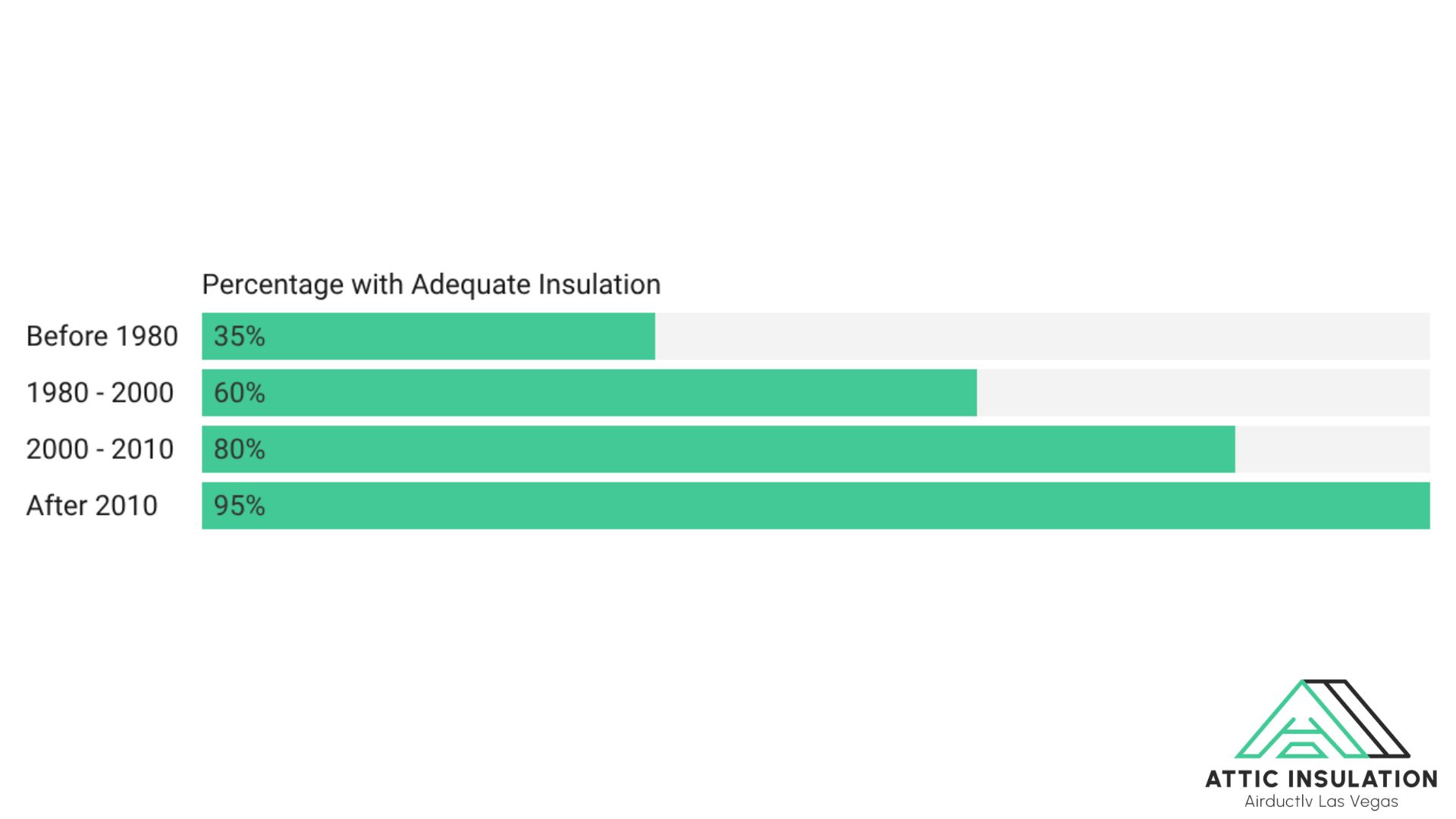
- Approximately 90% of homes built before 2000 in the United States have inadequate attic insulation as of 2026.
- Only 35% of homes constructed before 1980 in the US meet current R-value recommendations in 2026.
- About 60% of homes built between 1980 and 2000 in the United States have adequate attic insulation in 2026.
- Nearly 95% of homes built after 2010 in the US meet or exceed recommended R-values for their climate zone in 2026.
Building codes have evolved significantly over the past 50 years. Homes built before energy efficiency standards became common typically have R-11 to R-19 insulation, which falls short of current Department of Energy recommendations of R-38 to R-60 depending on climate zone. Building codes have evolved significantly over the past 50 years. Homes built before energy efficiency standards became common typically have R-11 to R-19 insulation, which falls short of current Department of Energy recommendations of R-38 to R-60 depending on climate zone. Most older homes in the United States need insulation upgrades to reach optimal performance levels.
Regional Insulation Rates Across the US in 2026
- The Northeastern United States has the highest percentage of adequately insulated homes at approximately 55% in 2026.
- Southern US homes have adequate attic insulation in about 45% of residences in 2026.
- Western states in the United States show approximately 48% of homes with proper attic insulation in 2026.
- The Midwest region of the US has roughly 52% of homes meeting recommended R-value standards in 2026.
Regional variations reflect climate awareness, energy costs, and building code enforcement. States with extreme temperatures and higher energy costs show better insulation adoption rates. Nevada and other hot climate states are increasing insulation requirements due to rising cooling costs and grid demands.
Most Common Existing R-Values in American Homes in 2026
- The most common attic insulation R-value in older US homes is R-19 as of 2026.
- Approximately 40% of American homes have attic insulation between R-11 and R-19 in 2026.
- About 30% of homes in the United States have R-30 to R-38 attic insulation in 2026.
- Only 15% of existing homes in the US have R-49 or higher attic insulation in 2026.
Most homes need insulation upgrades to meet current energy efficiency standards. Adding insulation over existing material is common and cost-effective when current insulation is in good condition. Complete attic insulation replacement and removal and are necessary only when existing insulation is damaged, contaminated, or compressed.
What is the Size of the US Attic Insulation Market in 2026?
Total Market Value of Residential Insulation in the United States in 2026
- The residential insulation market in the United States is valued at approximately $8 to $9 billion in 2026.
- Attic insulation specifically accounts for roughly 35% to 40% of the total residential insulation market in the US in 2026.
- The overall US insulation market (residential and commercial combined) exceeds $15 billion in total value in 2026.
Market growth continues driven by energy cost increases, climate concerns, and home improvement trends. According to industry analysis, the residential insulation sector maintains steady growth of 4% to 6% annually. Increasing awareness of energy efficiency benefits drives homeowner investment in insulation upgrades.
Market Growth Rate for Attic Insulation in the US from 2020 to 2026
- The US residential insulation market grew at an average annual rate of 5.2% from 2020 to 2026.
- Attic insulation installations in the United States increased by approximately 28% between 2020 and 2026.
- The spray foam insulation segment in the US grew at 7.5% annually from 2020 to 2026.
- Blown-in insulation installations in the United States increased by roughly 4% per year during the 2020 to 2026 period.
Rising energy costs and increased focus on home energy efficiency fuel market expansion. The COVID-19 pandemic initially slowed installation rates in 2020 but recovery was strong through 2021-2026. Government incentives and utility rebate programs support continued market growth.
| Year | Market Value (Billions) | Annual Growth Rate |
| 2020 | $6.8 | – |
| 2021 | $7.1 | 4.4% |
| 2022 | $7.5 | 5.6% |
| 2023 | $7.9 | 5.3% |
| 2024 | $8.3 | 5.1% |
| 2025 | $8.6 | 3.6% |
| 2026 | $8.9 | 3.5% |
Most Popular Insulation Materials in the US Market in 2026
- Blown-in fiberglass accounts for approximately 40% to 45% of attic insulation installations in the United States in 2026.
- Fiberglass batts represent about 25% to 30% of the US attic insulation market in 2026.
- Spray foam insulation captures roughly 15% to 20% of attic insulation installations in the United States in 2026.
- Cellulose insulation comprises approximately 10% to 15% of the US attic insulation market in 2026.
Material preferences reflect cost considerations, performance requirements, and installation methods. Blown-in fiberglass dominates due to its balance of affordability, performance, and ease of installation. Spray foam adoption increases annually as homeowners prioritize air sealing and maximum R-value per inch.
| Material Type | Market Share | Average Cost | Primary Benefit |
| Blown-In Fiberglass | 40-45% | $1.01 – $1.80/sq ft | Best value, good coverage |
| Fiberglass Batts | 25-30% | $0.86 – $1.50/sq ft | Lowest cost, DIY-friendly |
| Spray Foam | 15-20% | $1.30 – $3.50/sq ft | Best air sealing, highest R-value |
| Cellulose | 10-15% | $1.01 – $1.85/sq ft | Eco-friendly, good R-value |
What is the Environmental Impact of Attic Insulation in the United States in 2026?
CO2 Emissions Reduction from Proper Insulation in the US in 2026
- A single properly insulated home in the United States reduces CO2 emissions by approximately 2 to 4 tons annually in 2026.
- One million homes with upgraded attic insulation in the US prevent roughly 2.5 to 3.5 million tons of CO2 emissions per year in 2026.
- Proper attic insulation in the United States is equivalent to removing 500,000 to 700,000 cars from roads annually based on current installation rates in 2026.
- Homes upgrading from R-19 to R-49 in the US reduce their carbon footprint by 25% to 35% in 2026.
Environmental benefits extend beyond individual homes. According to EPA calculations, reducing home energy consumption through insulation upgrades significantly decreases power plant emissions. Natural gas heating and electric cooling both contribute to carbon emissions, making insulation a key strategy for residential emission reduction.
| Number of Insulated Homes | Annual CO2 Reduction (Tons) | Car Miles Equivalent |
| 1,000 | 2,500 – 3,500 | 6.25 – 8.75 million |
| 10,000 | 25,000 – 35,000 | 62.5 – 87.5 million |
| 100,000 | 250,000 – 350,000 | 625 million – 875 million |
| 1,000,000 | 2.5 – 3.5 million | 6.25 – 8.75 billion |
Energy Consumption Reduction Statistics in American Homes in 2026
- Homes with proper attic insulation in the United States use 20% to 40% less energy for heating and cooling in 2026.
- Attic insulation upgrades reduce total household energy consumption by 15% to 25% in the US in 2026.
- American homes with R-49 attic insulation use approximately 1,000 to 2,000 fewer kilowatt-hours annually in 2026.
- Natural gas consumption for heating decreases by 150 to 300 therms per year in properly insulated US homes in 2026.
Energy reduction translates directly to lower utility bills and reduced environmental impact. Peak demand on electrical grids decreases when homes maintain temperature more effectively. Summer cooling load reductions particularly benefit states like Nevada where AC demand drives grid stress.
Renewable Material Usage in US Insulation Manufacturing in 2026
- Approximately 30% to 40% of cellulose insulation in the United States is made from recycled paper products in 2026.
- Fiberglass insulation in the US contains 40% to 60% recycled glass content in 2026.
- Bio-based insulation materials account for roughly 5% to 8% of the residential insulation market in the United States in 2026.
- Recycled content in US insulation materials increased by approximately 15% from 2020 to 2026.
Manufacturers increasingly use recycled materials to reduce environmental impact and production costs. Cellulose insulation made from recycled newspaper and cardboard offers good performance with minimal environmental footprint. Industry trends favor sustainable materials as consumer awareness grows.
What Are the Most Common Attic Insulation Problems in US Homes in 2026?
Percentage of Homes with Compressed or Settled Insulation in 2026
- Approximately 45% to 55% of homes with blown-in insulation in the United States experience settling of 10% to 20% within 5 years in 2026.
- About 30% of American homes have compressed insulation due to storage or foot traffic in attics in 2026.
- Cellulose insulation in the US settles 15% to 20% on average within the first 2 years after installation in 2026.
- Fiberglass batt insulation shows compression in roughly 25% of installations due to improper fitting or storage in 2026.
Settling and compression reduce effective R-value and insulation performance. Contractors account for settling by installing extra depth initially, but homeowners should check insulation levels every 3 to 5 years. Compressed insulation from storage items or walking on it creates cold spots and reduces efficiency.
Air Leakage Statistics in American Attics in 2026
- Approximately 70% of homes in the United States have significant air leakage through attic penetrations in 2026.
- Air sealing combined with insulation improves energy efficiency by an additional 15% to 25% in US homes in 2026.
- Unsealed attics in the United States lose 25% to 40% of heating and cooling energy through air leakage in 2026.
- Proper air sealing before insulation installation increases effective R-value by 20% to 30% in American homes in 2026.
Energy Star research shows that air sealing is as important as insulation itself. Gaps around chimneys, plumbing vents, electrical penetrations, and attic hatches allow conditioned air to escape. Professional installation typically includes air sealing as part of comprehensive insulation upgrades.
Moisture and Mold Issues Related to Insulation in the US in 2026
- About 15% to 20% of homes in the United States experience moisture problems in attics due to inadequate ventilation in 2026.
- Approximately 10% of American homes show signs of mold growth in attic insulation in 2026.
- Roof leaks affect roughly 8% to 12% of insulated attics in the US annually in 2026.
- Proper ventilation reduces moisture-related insulation problems by 80% to 90% in American homes in 2026.
Moisture issues damage insulation and reduce effectiveness. Wet insulation loses R-value and can promote mold growth. Nevada’s dry climate minimizes moisture concerns compared to humid regions, but roof leaks and HVAC condensation still create problems. Proper attic ventilation is essential regardless of climate zone.
Final Thoughts
Attic insulation statistics reveal significant opportunities for American homeowners to reduce energy costs and environmental impact. The data shows that most homes built before 2000 have inadequate insulation, but upgrades pay for themselves within several years through energy savings.
- The average American homeowner can expect to pay between $1,500 and $3,500 for professional attic insulation installation in the United States in 2026.
- Properly insulated attics in the US reduce annual energy costs by $200 to $600 per year with payback periods of 3 to 7 years as of 2026.
These statistics demonstrate that attic insulation represents one of the most cost-effective home improvements available. The combination of immediate comfort improvements, long-term energy savings, and environmental benefits makes insulation upgrades valuable for most American homes. Rising energy costs and increasing climate awareness continue to drive market growth and homeowner interest in 2026.
Understanding these statistics helps homeowners make informed decisions about insulation projects. Whether you’re building new, buying an existing home, or planning upgrades, knowing average costs, expected savings, and typical payback periods allows for realistic budgeting and planning.
Sources
- U.S. Department of Energy: R-value recommendations, energy savings data, and insulation guidelines. (https://www.energy.gov/energysaver/insulation)
- Energy Star (EPA): Energy efficiency statistics, air sealing benefits, and consumer guidance. (https://www.energystar.gov/)
- North American Insulation Manufacturers Association (NAIMA): Industry statistics, insulation adequacy data, and market analysis. (https://www.naima.org/)
- Environmental Protection Agency (EPA): Carbon emissions reduction calculations and environmental impact data. (https://www.epa.gov/)